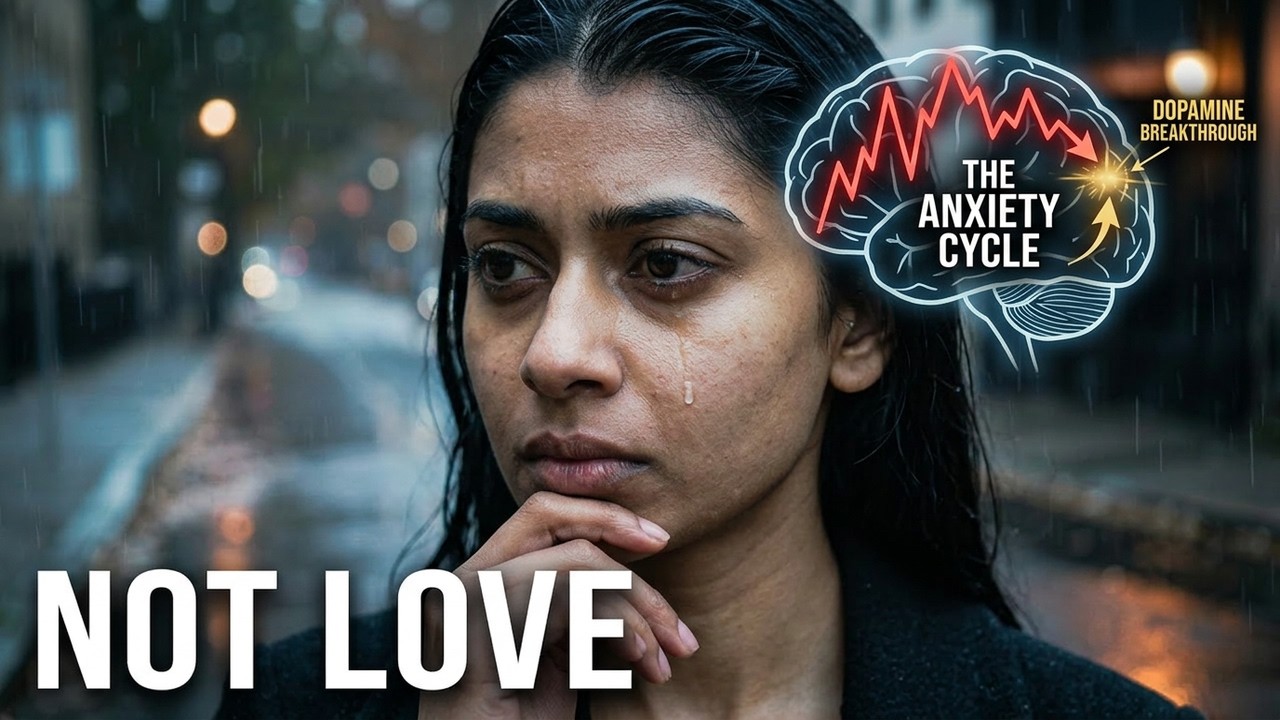
Heartbreak can do something strange to your sense of reality. A relationship ends, someone walks away, or you finally accept that the person you loved was never going to meet you where you needed them to, and suddenly the questions begin. You start replaying conversations, looking for warning signs, wondering what you missed, and trying to identify the exact moment when everything changed. Before long, the pain of the breakup starts turning into self-doubt. You stop asking what happened between the two of you and begin asking what was wrong with you.
That is one of the reasons I wanted to make this video about heartbreak, breakups, rejection, and self-worth. When people search for how to get over a breakup or how to heal a broken heart, they are usually looking for relief from the emotional pain. But there is another part of the experience that can last much longer than the breakup itself: the way rejection can quietly change how you see yourself.
Pain Is a Terrible Philosopher
Pain has a way of convincing us that it is telling the truth. When someone rejects you, leaves you, chooses another path, or simply cannot love you the way you hoped they would, the mind immediately begins looking for an explanation. If you are already hurting, the explanation often becomes personal. Maybe I was not attractive enough. Maybe I was too emotional. Maybe I expected too much. Maybe I should have been easier to love. Maybe if I had said something differently, given more, waited longer, or been more patient, the outcome would have changed.
I said something in the video that I believe is worth remembering during any period of heartbreak: pain is a terrible philosopher. Pain wants an explanation, but it does not necessarily give you an accurate one. It takes whatever happened and tries to turn it into a conclusion about who you are. That is where a breakup can begin damaging more than your relationship. It can begin damaging your confidence in your own worth, judgment, and ability to trust yourself.
Two People Can Care About Each Other and Still Be Incompatible
There are relationships where two people simply want different things. There are people who can care about each other and still be deeply incompatible. One person may want emotional depth, consistency, honesty, and a real future, while the other is comfortable with something far more limited. One person may be willing to talk through difficult things while the other avoids them. One may see love as something that requires presence and responsibility, while the other enjoys the parts of the relationship that are convenient and withdraws when the relationship asks more of them.
When that happens, the person who wants more depth often starts working harder. You explain yourself again, give the relationship another chance, lower an expectation, and excuse behavior you would once have questioned. You tell yourself that the other person is stressed, afraid, busy, confused, or just needs more time. Somewhere in that process, you can become so focused on keeping the relationship alive that you stop asking whether the relationship is actually good for you.
That is where self-doubt can grow long before the breakup happens.
You begin measuring yourself by the other person's response. If they pull away, you wonder what you did. If they become distant, you try harder. If they are inconsistent, you become more careful. Eventually, the entire relationship can revolve around trying to create an outcome that requires two willing people, while only one of you is doing most of the emotional work.
Then the relationship ends, and you call yourself a failure.
I think many people need to hear this clearly: the end of a relationship does not automatically mean you failed. Sometimes it means the relationship finally revealed what it had been trying to show you for a long time.
Rejection as Redirection
That is where the idea of rejection as redirection becomes useful, but only when we understand what it really means. I do not believe people should rush to put a positive label on something that genuinely hurts. Heartbreak hurts because something mattered to you. There is nothing wrong with grieving it. But with enough time and distance, rejection can become information. It can show you where you were compromising too much, where you ignored behavior because you wanted to believe a promise, or where you had fallen in love with what the relationship might someday become rather than what it actually was.
A breakup that feels devastating today may prevent you from spending another five years trying to get the same person to give you something they have repeatedly shown you they cannot give. A rejection may eventually free you from building your future around someone who was never going to build one with you.
None of this makes the pain imaginary. With enough perspective, though, the same ending can be understood differently than it is understood in the first weeks.
Learn From the Experience Without Punishing Yourself
One of the most damaging things people do while trying to move on after a breakup is turn every mistake into evidence against themselves. There is value in looking back honestly. Maybe you did ignore things you should have paid attention to. Maybe you stayed after you knew something was wrong. Maybe you trusted words when the behavior was telling you something different. Those are lessons worth carrying forward. They can make you wiser, more observant, and more willing to protect your own boundaries.
But there is a difference between learning from an experience and using the experience to punish yourself.
You can say, "I should have trusted what I was seeing sooner," without saying, "I was stupid for loving that person." You can recognize that you tolerated too much without deciding that there is something fundamentally wrong with you. You can admit that you wanted something badly enough to overlook reality without losing faith in your ability to make better decisions next time.
That is an important part of healing a broken heart. You should come out of the experience knowing yourself better, not being afraid to trust yourself at all.
The Connection to Elara
This is also one of the reasons the message connects so closely with Elara. At the center of that story is the loss of self that can happen when a person spends too much time becoming what other people need. Most people will never experience what Elara experienced, but the underlying pattern can appear in ordinary relationships every day. You start with one compromise, then another. You become better at reading the other person's moods, needs, expectations, and reactions, while paying less attention to your own. Eventually, you can know everything about what makes the relationship work for them while barely asking whether it works for you.
So if you are going through heartbreak right now, there is a question I would rather have you ask than, "Why wasn't I enough?"
Ask yourself this instead:
Why did I allow someone else's ability to love me to become the measure of my value?
That question may take you somewhere much more useful.
I made this video for anyone who has been through a breakup and found themselves questioning who they are because of it. If you are trying to understand how to get over a breakup, how to stop blaming yourself, or how to rebuild your confidence after rejection, take a few minutes and watch it all the way through. You may find that what feels like the end of something today eventually becomes the point where you started listening to yourself again.
Elara: How Losing Herself Became the Road Back Home is also available now for anyone who wants to go deeper into the subjects of self-worth, survival, losing yourself, and finding your way back.